SWR Stuttgart
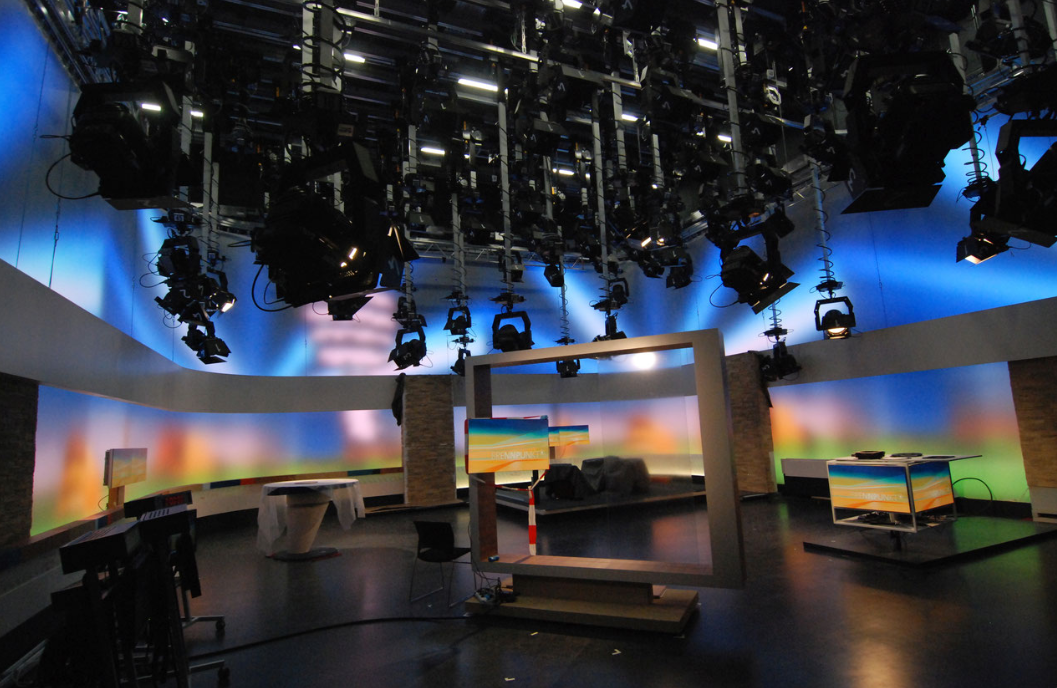
In August 2010, SWR commissioned the lighting equipment for the studios of the new regional broadcasting centre in Stuttgart. The studios were approved and handed over to SWR in September 2011 after only 12 months of construction, including detailed planning.
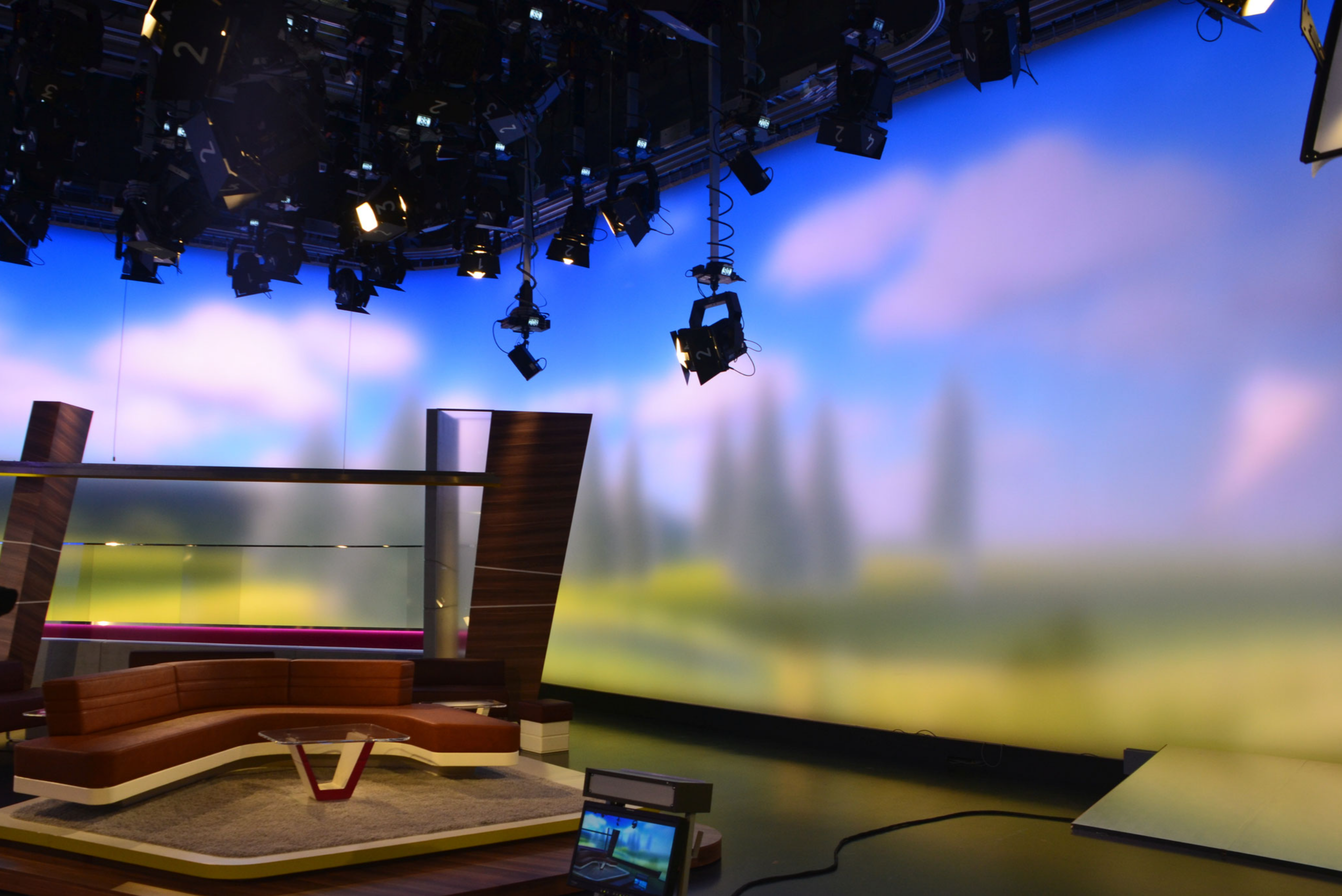
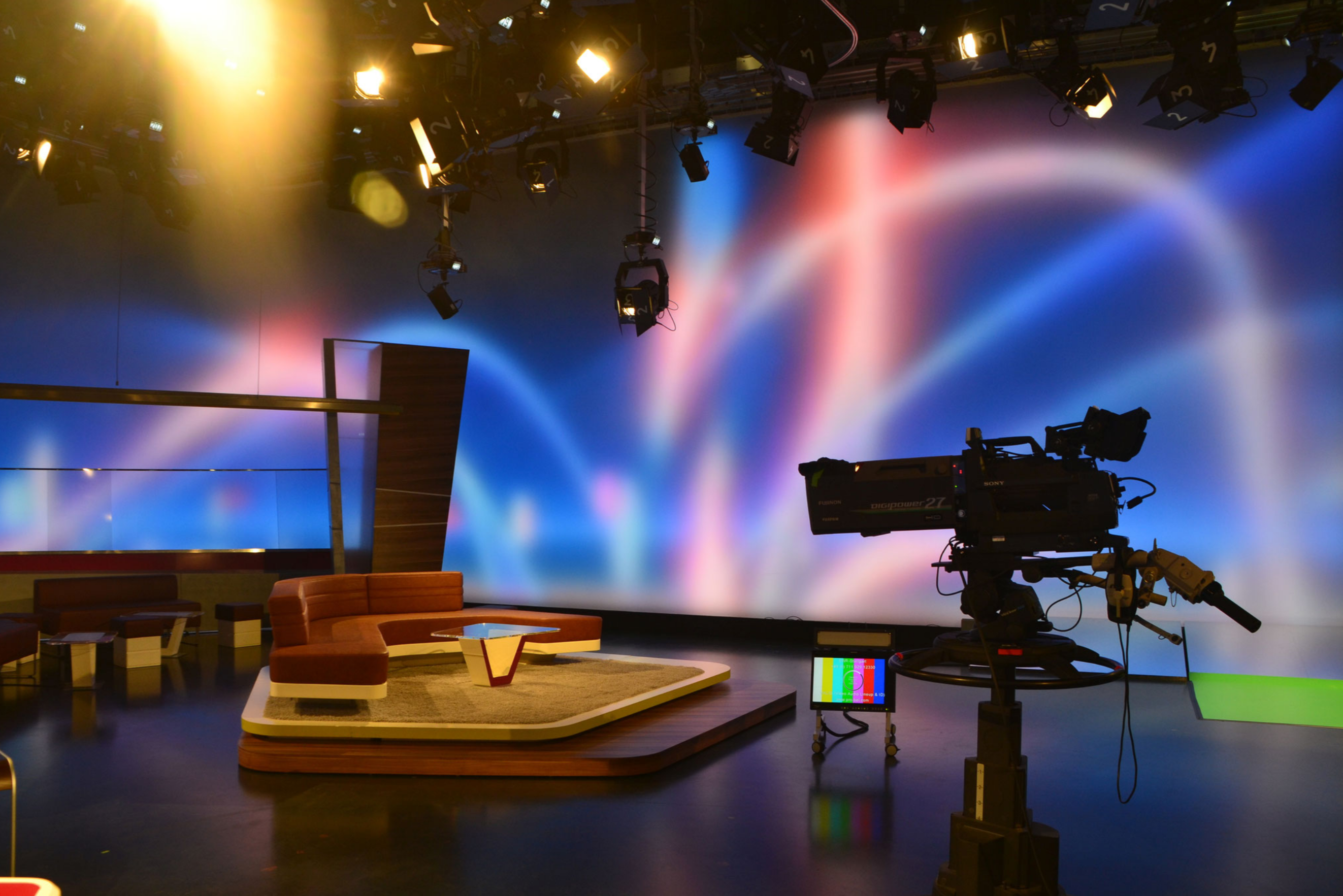
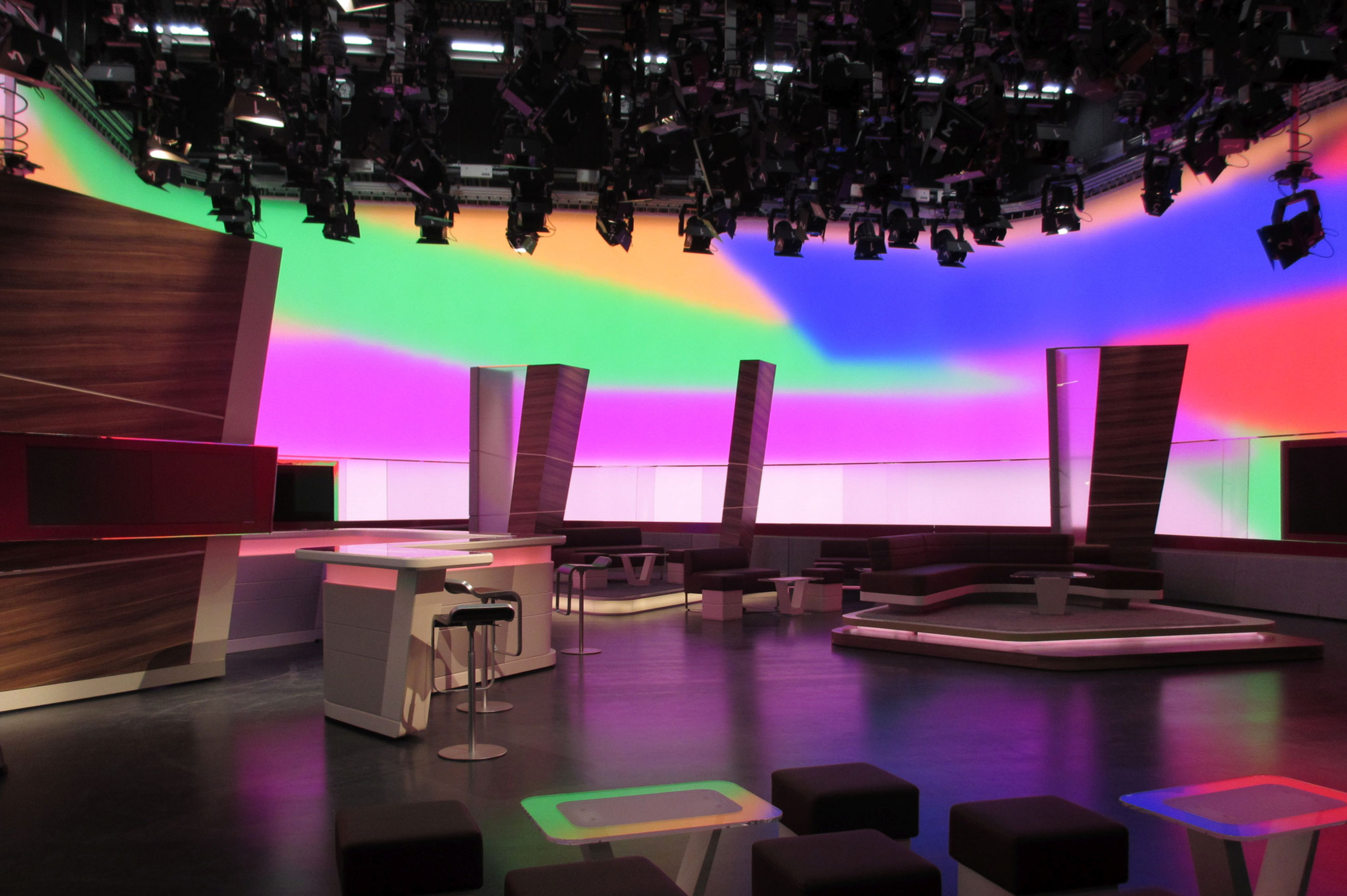
The new building contains four production studios measuring approximately 400, 280, 100 and 108 square metres, which are equipped with state-of-the-art lighting technology. The motorised telescopic and spotlight technology in three studios allows for fully automatic operation with position memory. The coloured background design is created using LED technology behind projection foils.
SWR’s planning specifications were based on experience with automated lighting technology in Studio 1 at the old Villa Berg location and the latest findings on the use of modern LED technology for background design with graphic motifs, lettering and video content. Extensive testing by SWR led to clear solution specifications in the tender.
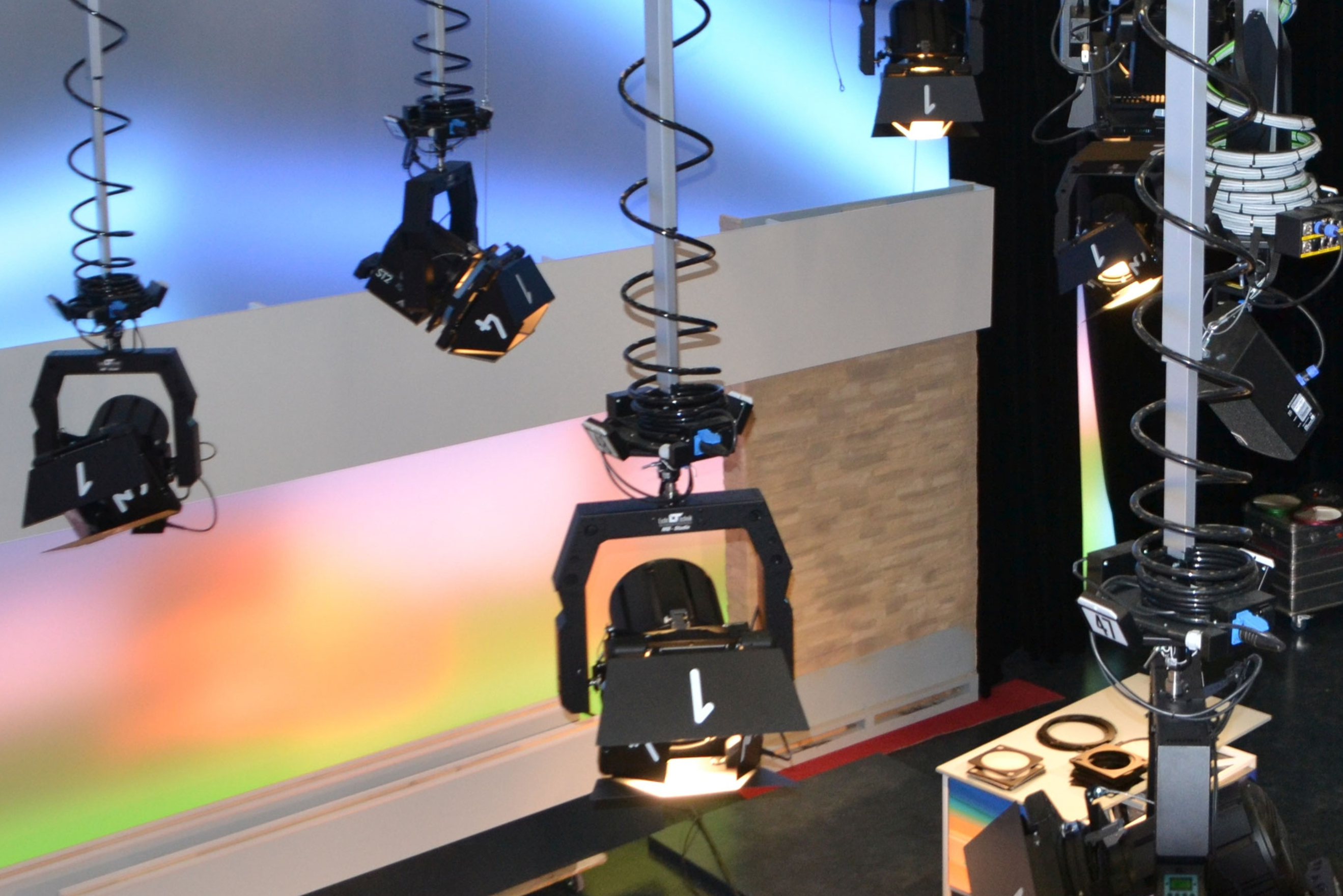
The necessary infrastructure in the studio ceiling area was implemented using TV-TRACK TT 200 precision rail systems and flanged Vahle conductor rails. Both the telescopic light hangers for lighting and media technology and the point hoists are moved on their own rail systems.
The three fully automated studios are equipped with a total of 255 MTS telescopes with motorised step lens spotlights for lighting technology, 18 media telescopes with AV connections and 45 point lifts. All devices are controlled via LSS Discovery studio automation systems. Separate control stations, also with touch panels, are available for the point lifts.
Arri 2 kW spotlights with 250 mm lenses and 2/1 kW spotlights with 175 mm lenses are used, although even the 2 kW units are mainly equipped with only 1000 W lamps. The motorisation of the spotlights was supplied by Lichttechnik München.
In the smaller Studio D with a lower ceiling height, manually operated pantographs in TV-TACK TT 120 running rails are used, as well as rod-operated Fresnel spotlights and cold light soft spotlights.
For lighting control, grandMA Light lighting consoles were chosen for the three control rooms and two large studios, while grandMA on PC was installed as wall-mounted control panels in the two smaller studios. The lighting consoles are networked so that the control rooms can be assigned to the studios as desired. All control room workstations are illuminated with Contro-LED workstation lights. Thyristor devices with a 400 μs rise time from MA-Lighting are used as dimmers, which communicate with the lighting consoles regarding status values or error messages. The resulting harmonics from the dimmer technology and the different phase loads are regulated per studio by active filters from Schaffner.
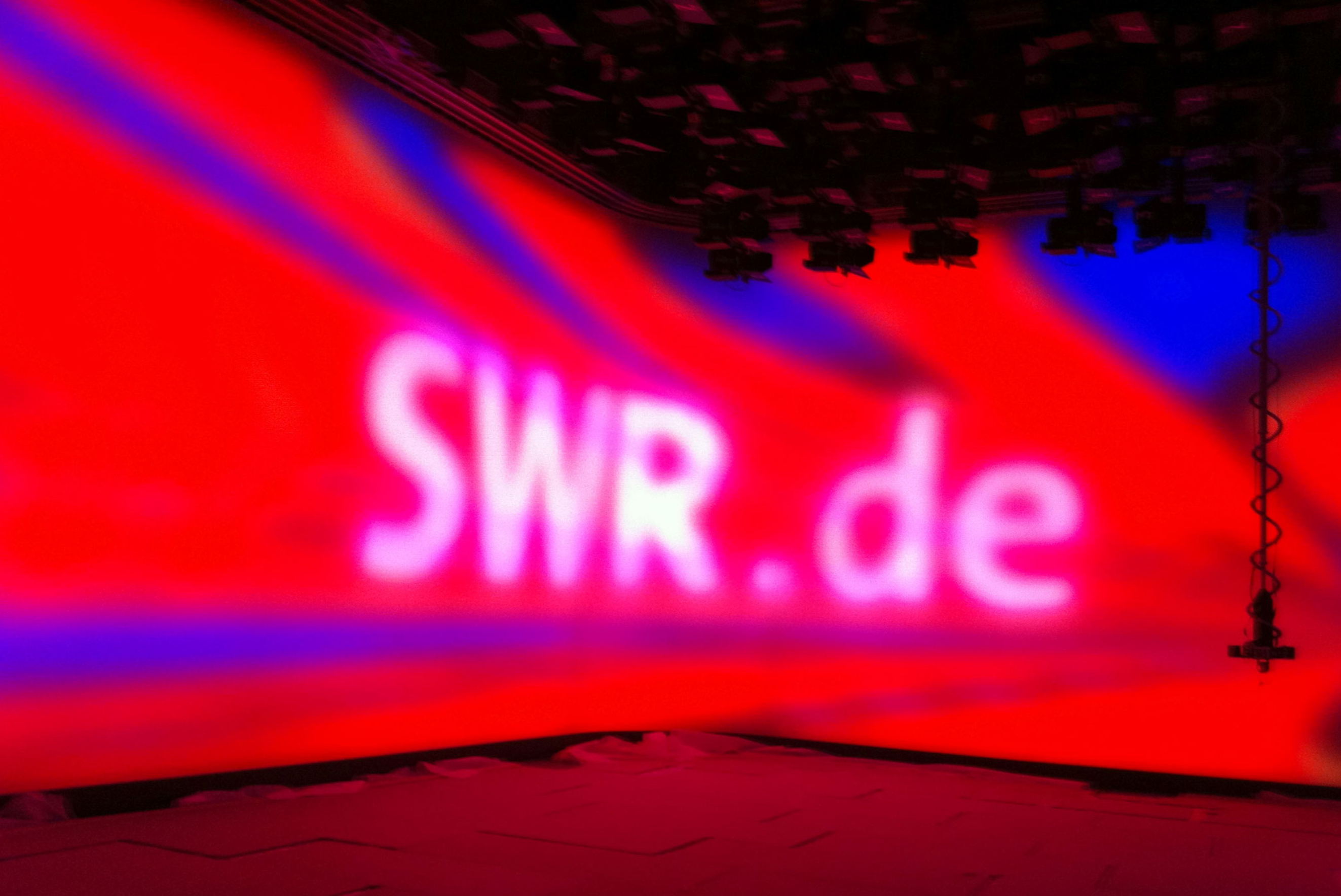
A particular challenge was the planning and installation of LED technology in three studios. Horizontal surfaces of up to 560 m² (height 6 m), including the arches, are illuminated with RGB LEDs in a pixel grid of 10 cm at a distance of 16–23 cm. Together with the Transmission projection film stretched in front of the LEDs, this results in unlimited design possibilities with homogeneous colour surfaces as well as static or dynamic colour gradients, font projections or other content from video sources. The projection sharpness depends on the distance between the LEDs and the film and can be changed by moving the LED construction. The bulging that occurs when the projection foil is stretched in the curved areas is compensated for by special tensioning devices on the individual LED strips, which allow bending and thus adjustment of the distance to the foil, so that the images are the same on the straight surfaces as well as in the curved areas.
The smaller Studio C was set up as a virtual studio and is equipped with a green box background illuminated by INTEGRA HZ 2 x 160 W cold light horizon lights. The ISYGLT system from Seebacher was used to switch on the main and sub-distribution boards and the studio’s general lighting from the respective control rooms, even when the assignment was changed. The system is freely programmable and is operated via touch panel stations.